7 Signs Your Bathroom Needs a Full Remodel
Cracked tile, persistent mold, and a tub you never use? These warning signs tell you it's time for a bathroom renovation — not just a quick fix.
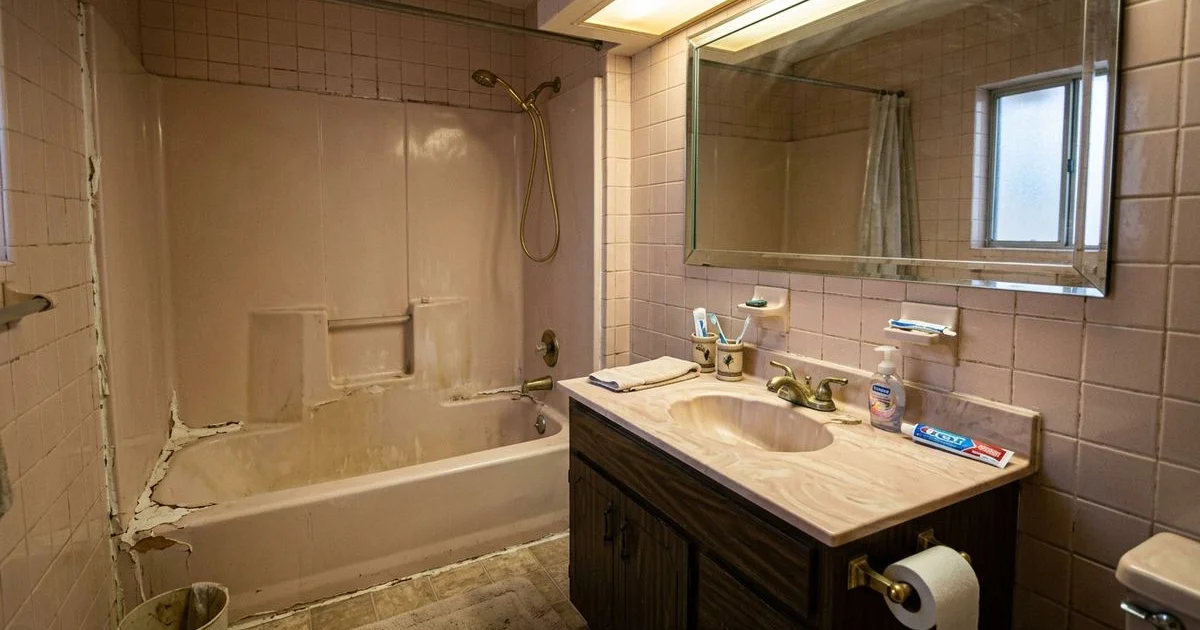
You know how certain rooms in a house just seem to age faster than the rest. Bathrooms take the brunt of daily life with constant moisture and rapid temperature shifts. We observe this constantly as a professional service team handling renovations across the US.
Surface-level fixes might hide the wear for a little while.
Eventually, those small cosmetic annoyances turn into active problems that damage your home’s structure. Our team has put together a clear guide to help you read the warning signs. Knowing the 7 signs your bathroom needs a full remodel helps you make a confident decision.
Ignoring a failing shower or an outdated layout ends up costing more money than a professional bathroom remodeling project. The right upgrade protects your investment and improves your daily routine. So, let’s look at the data to understand the difference between a simple patch job and a necessary renovation.
1. Cracked or Loose Tiles
You can usually replace a single cracked tile without a full renovation. But when you see multiple cracks or tiles that rock when stepped on, the problem is what hides behind them. Grout lines that crumble when touched also indicate a severe underlying issue.
Our installers often find that tiles loosen because the substrate simply fails. In Arizona and across the US, this frequently happens when older homes used greenboard or regular drywall in a shower area. Building codes no longer approve greenboard for residential wet areas because it expands and ruins the tile if water penetrates. A concrete slab shifting beneath floor tiles causes similar widespread cracking.
Common reasons tile foundations fail:
- Use of outdated greenboard in wet zones
- Concrete slab settling under the house
- Lack of a modern waterproofing membrane
- Improper stud spacing causing wall flex
Replacing individual tiles on a compromised substrate is a temporary bandage. They will crack again because the bonding surface is unstable.
We strongly recommend stripping the walls down to the studs to address the root cause. A proper remodel involves installing a 100% waterproof cement board, like HardieBacker with HydroDefense Technology, which meets ANSI A118.10 standards. This upgrade creates a completely sound foundation for your new tile.
2. Persistent Mold or Mildew
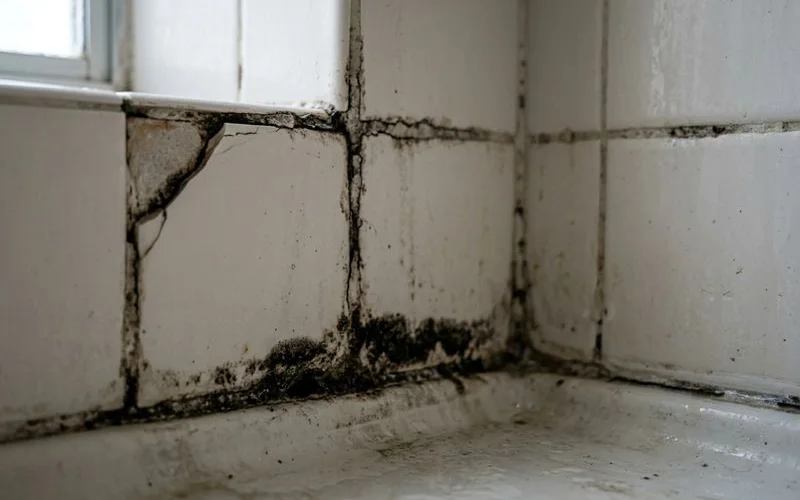
Mold in a bathroom is a common occurrence because it is a wet room. But when mold keeps returning after cleaning, moisture is penetrating behind your finished surfaces. You will typically see this persistent growth in corners, along caulk lines, or between tiles.
Grout is porous and not waterproof. Water eventually penetrates these grout joints and reaches the wall behind. The US Environmental Protection Agency notes that bathrooms are the primary source of indoor mold because excess moisture gets trapped.
Pro Tip: Never use bleach to clean porous grout. It bleaches the color of the mold but leaves the roots alive inside the porous material.
If the waterproofing membrane has failed, the wall cavity stays damp and creates the perfect environment for mold colonization. Surface cleaning only treats the symptom.
The mold growing inside the wall cavity is the actual threat to your air quality. We fix this by removing the affected drywall and treating or replacing the wood framing. A professional remodel installs a high-quality barrier, such as a Schluter Kerdi membrane, to stop moisture before it ever hits the framing. This ensures the problem never returns.
3. A Tub You Never Use
If your bathtub has become a storage shelf for shampoo bottles, it takes up valuable real estate. National data shows homeowners are converting these underused tubs into spacious walk-in showers. You gain usable space while eliminating a fixture that serves no practical purpose for your daily routine.
Our remodeling data shows that a tub-to-shower conversion is one of the highest-impact projects you can choose. The 2026 Houzz Bathroom Trends Study reports that 28% of homeowners are now choosing curbless showers for better accessibility. This project visually opens up the room and makes it much easier to age in place safely. Expect a national average cost of about $4,135 for a standard tub-to-shower conversion, depending on the materials used.
| Feature | Traditional Bathtub | Walk-in Shower |
|---|---|---|
| Accessibility | High step-over threshold | Low or zero-clearance entry |
| Space Utilization | Consumes 13-15 square feet | Can fit into tighter custom layouts |
| Water Usage | 40-50 gallons per bath | 15-25 gallons per 10-minute shower |
| Resale Value | Essential for family homes | Highly desired in primary suites |
There is one important exception regarding home value. Keep at least one bathtub in your house to appeal to families with young children. If your house has two or more bathrooms with tubs, converting one to a walk-in shower is a smart move. Buyers will appreciate the modern update if you sell within a few years.
4. Outdated Fixtures and Layout
Brass fixtures from the 1990s and cultured marble vanity tops make a bathroom feel old. A single-handle shower valve with no pressure balancing means you get scalded when someone flushes a toilet. Updating these elements goes far beyond pure aesthetics.
Older fixtures waste a massive amount of water every single day. Modern low-flow showerheads use significantly less water than their vintage equivalents while delivering comparable pressure. The EPA WaterSense program states that upgrading to modern aerators and showerheads saves the average family 2,900 gallons of water per year. In regions like Arizona where water conservation matters, these savings directly lower your monthly utility bills.
Upgrades that deliver immediate ROI:
- EPA WaterSense labeled faucets at 1.5 gallons per minute
- Showerheads with pressure-balancing valves
- Floating vanities that increase visible floor space
- Integrated LED lighting around mirrors
Our designers know that outdated layouts also miss critical opportunities for better function. Modern bathroom design prioritizes wider vanity counters and medicine cabinets with integrated lighting. We install shower niches to completely eliminate the need for hanging caddies and messy suction-cup shelves.
5. Water Damage Around the Base of the Toilet
Soft or spongy flooring around your toilet base acts as a serious warning sign. It typically means the wax ring seal between the toilet and the drain flange has failed. Water slowly seeps into the subfloor with every single flush.
In homes built on concrete slabs, this trapped moisture slowly degrades the adhesive and promotes mold growth. Raised-foundation homes face an even bigger risk as the plywood subfloor actually rots away.
We often see homeowners rely on traditional wax rings, which are single-use and easily melt or deform in high temperatures. Many plumbing professionals now recommend a modern silicone seal like the ones from Oatey. These wax-free rings adapt to uneven flanges and handle temperature shifts perfectly.
Warning: A toilet that rocks even slightly when you sit down has likely already broken its wax seal. Address this immediately to prevent structural water damage.
By the time the floor feels soft, the damage usually extends beyond the immediate toilet area. A targeted repair might work if caught early, but the surrounding floor tile often requires complete replacement. Subfloor repairs can add an extra $3.75 to $7 per square foot to your budget. Fixing a rotten subfloor pushes you directly into a full bathroom remodel.
6. Poor Ventilation
If your bathroom mirror stays fogged for 30 minutes after a shower, your ventilation is inadequate. Peeling paint on the ceiling is another clear indicator of trapped humidity. Many older homes have undersized exhaust fans or rely entirely on a window that nobody opens.
Poor ventilation accelerates every other problem on this list by fueling mold growth and degrading grout. Excess moisture easily warps vanity cabinets and damages drywall.
Our remodeling process always includes a strict review of your home’s air exchange systems. The ASHRAE 62.2 standard requires proper continuous ventilation for indoor air quality. A bathroom fan should be rated for at least 1 CFM per square foot of room size.
Upgrading Your Exhaust System
A bathroom remodel gives you the perfect opportunity to upgrade to a properly sized exhaust fan. We recommend installing a high-performance unit, like the Panasonic WhisperCeiling, which operates almost silently at 2.0 sones. Your new fan must vent to the exterior, never into the attic.
7. Your Bathroom Doesn’t Match the Rest of Your Home
If you have updated your kitchen and living areas, a bathroom that still looks like 2003 creates a jarring contrast. Bathrooms rank as one of the first spaces home buyers and guests judge. An outdated bathroom drags down the perceived value and quality of the entire property.
This aesthetic mismatch matters greatly if you plan to sell. The Remodeling 2026 Cost vs. Value Report from Zonda shows that a mid-range bathroom remodel recoups roughly 80% of its cost at resale. This is the strongest return on investment for this specific project type in nearly two decades. Buyers will pay a premium for a home that requires no immediate work.
Our clients tell us that an updated space also dramatically changes how they feel about their home daily. The 2026 Houzz trends highlight warm wood tones and horizontally stacked tiles as major style choices right now. A well-designed room simply improves your morning routine and your general satisfaction.
High-Impact Design Trends
- Flat-panel cabinetry for a sleek, easily cleaned surface
- Natural stone slabs like quartzite with subtle veining
- Wall-mounted faucets that save counter space
- Warm, earthy color palettes that ground the room
Reviewing the 7 Signs Your Bathroom Needs a Full Remodel: Repair vs. Replace
Minor Repairs Make Sense When
- A single tile is cracked but surrounding tiles and grout are sound.
- Caulk needs replacing along the tub or shower edge as normal maintenance.
- A faucet drips and just needs a cartridge replacement.
- Paint is peeling but the drywall underneath remains solid.
A Full Remodel is the Right Call When
- Multiple signs from this list are present simultaneously.
- The bathroom is 20+ years old with original surfaces and fixtures.
- Water damage has reached the plywood subfloor or wall framing.
- The layout fails to function for your household’s daily needs.
- You are planning to sell within five years and need to compete with updated homes.
What a Bathroom Remodel Costs in Maricopa County
Budgeting for a renovation requires an understanding of current market rates and material costs. The range is wide because the scope of work varies enormously from house to house. Labor rates and material choices dictate the final price tag.
Here is a breakdown of estimated costs based on local Arizona projects and national averages:
| Remodel Tier | Estimated Cost Range | Typical Scope of Work |
|---|---|---|
| Budget Refresh | $3,000 - $6,000 | New vanity, modern fixtures, fresh paint, and minor tile work. |
| Mid-Range Full Remodel | $8,000 - $15,000 | New floor tile, updated vanity, modern fixtures, and standard shower update. |
| Premium Custom Remodel | $15,000 - $30,000+ | Custom tile shower, complete layout change, and premium luxury fixtures. |
If you recognize the 7 signs your bathroom needs a full remodel, taking action now prevents costly structural damage. Our team provides a free in-home consultation to assess your specific situation and deliver a detailed, written estimate. Schedule your free bathroom consultation or call Zona Floors at 480-428-5080.

Thomas Inman
Owner, Zona Floors
Thomas Inman founded Zona Floors in 2022 with a mission to bring honest pricing and quality craftsmanship to homeowners across Maricopa County.
Arizona ROC License #336899 · Thumbtack Top Pro 2023–2025
Looking for professional help?
Learn about our Bathroom Flooring service →