5 Signs It's Time to Replace Your Home's Flooring
Warped planks, persistent stains, and creaking underfoot? Learn the warning signs that mean your floors need professional replacement — not just repair.
We regularly inspect homes where delayed flooring upgrades have caused expensive structural issues. Spotting the difference between normal wear and a failed surface is crucial for your budget, which is why knowing the 5 Signs It is time to replace your floor is so valuable.
Most property owners miss the early indicators of subfloor damage.
Our team compiled this guide to help you make a timely, data-driven decision. These are the 5 Signs It is time to abandon patch jobs and invest in a new flooring installation. This outline covers the exact modes of failure and practical ways to respond.
1. Visible Warping, Buckling, or Cupping
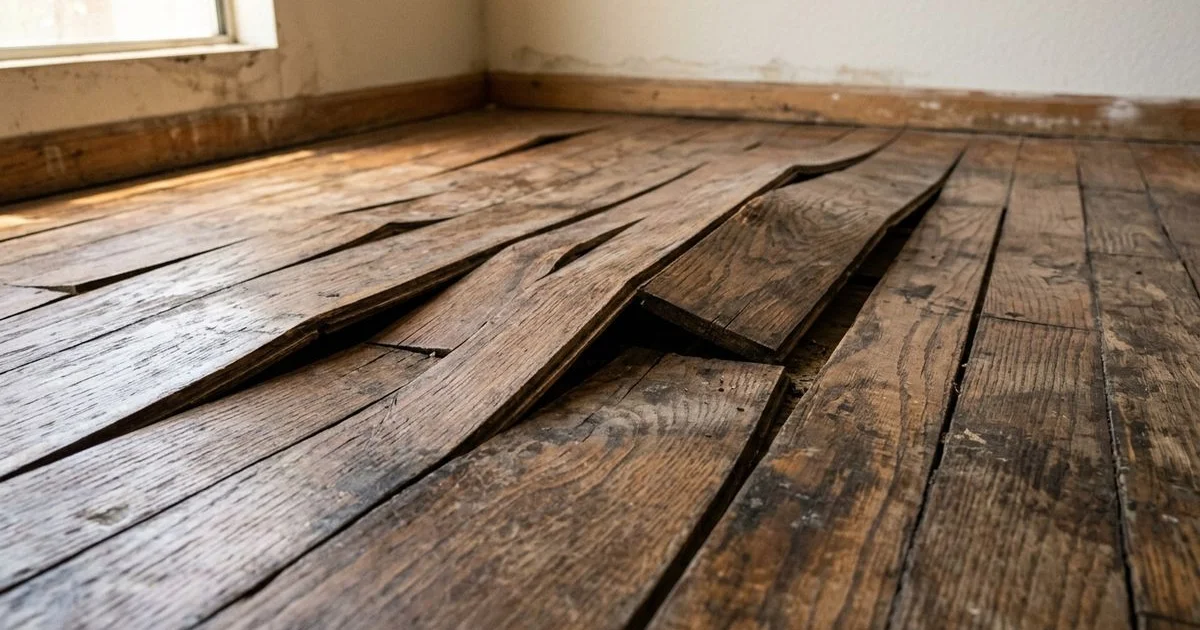
When hardwood planks bow upward at the edges, moisture has already penetrated the subfloor. Cupping occurs when the underside of the board absorbs more water than the top surface. In the US, this frequently happens due to undetected HVAC condensation line drips or slow plumbing leaks.
Our technicians always check the wood’s moisture content before recommending a fix. The ideal moisture level for solid hardwood flooring sits between 6% and 9%. Readings outside this range indicate an active leak that requires immediate attention.
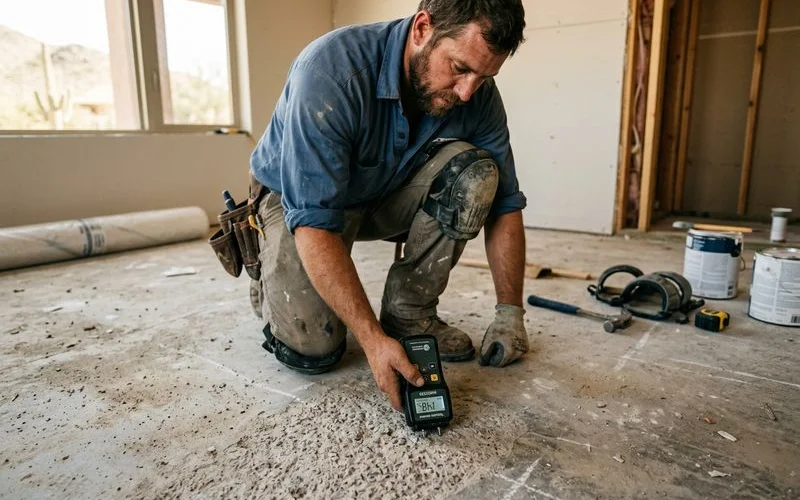
We use pinless moisture meters like the Wagner Orion 910 to scan up to three-quarters of an inch deep. This tool helps identify hidden water damage without drilling holes into your planks. The subfloor moisture content should never differ from the hardwood by more than 2% to 4%.
Common sources of hidden moisture include:
- Leaking water heaters
- Poorly ventilated crawl spaces
- Shifting concrete slab foundations
- Degraded window seals
Our advice is to walk barefoot across your rooms to feel for new ridges or soft spots. Patching individual planks over a wet subfloor is a waste of money. You must dry the structural wood completely before installing new planks.
2. Persistent Stains That Won’t Come Out
Every floor catches a spilled glass of wine or tracked-in mud eventually. Surface stains usually respond well to standard cleaning products and a little scrubbing. Deep discoloration that resists professional treatments indicates the protective wear layer has completely failed.
We see this exact problem constantly with older carpets and pets. Animal urine contains urea and uric acid that soak straight through the carpet padding. These liquids form ammonium salt crystals inside the wooden subfloor.
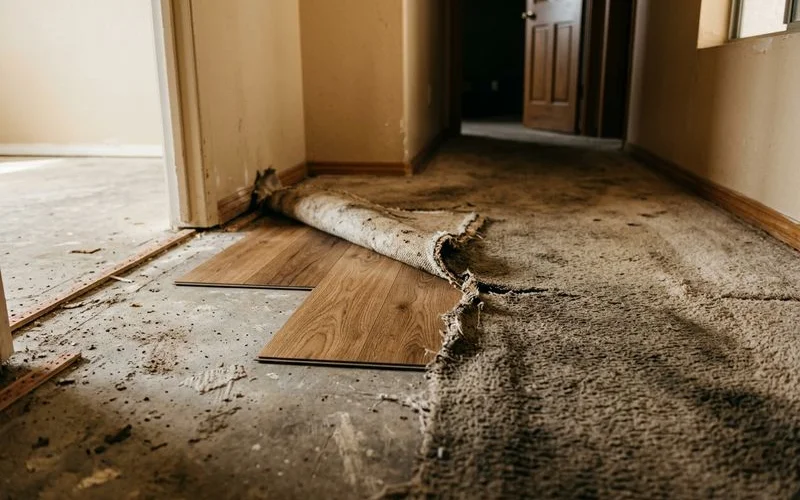
Our teams know that shampooing will never remove crystallized salts from oriented strand board. The moisture activates the salts and creates a permanent ammonia smell in your home. You must remove the contaminated carpet and padding entirely.
| Material | Sign of Permanent Damage | Required Action |
|---|---|---|
| Carpet | Odors returning after deep cleaning | Replace pad and seal subfloor |
| Laminate | Dark edges swelling at the seams | Replace affected planks |
| Hardwood | Black stains deep in the grain | Refinish or replace boards |
We always apply a shellac-based primer like Zinsser B-I-N to the exposed subfloor. This specific sealer locks in the off-gassing odors before installers lay down new materials. Skipping this sealing step guarantees the smell will infect your brand new floors.
3. Cracks, Chips, and Broken Tiles
Cracked ceramic or porcelain tiles create a direct pathway for water to destroy your subfloor. Moisture seeping through these fissures quickly rots the wood joists in wet areas like bathrooms or kitchens. Repairing the structural rot costs significantly more than replacing the tile surface early.
We regularly encounter failed mortar beds hidden beneath shifting tiles. If widespread cracking occurs or the tiles sound hollow when tapped, the thin-set adhesive has lost its bond. A full tear-out is the safest way to prevent dangerous mold growth.
The Impact of Concrete Slab Settling
Our service area in the Sun Belt has a high concentration of homes built on concrete slabs. These foundations naturally settle and shift as soil moisture changes. This movement exerts massive pressure that easily snaps rigid porcelain.
Moisture from the soil can then push up through the unsealed concrete foundation. This hydrostatic pressure degrades the adhesives holding your flooring in place.
We recommend having the concrete slab tested for relative humidity before pouring new leveling compound. The ASTM F2170 standard dictates that concrete must read below 75% relative humidity for safe installation. Installing new tile over an active foundation crack without an isolation membrane guarantees future fractures.
4. Creaking, Squeaking, or Soft Spots
Floors that squeak loudly underfoot indicate a mechanical failure in the layers beneath the finish. The noise usually happens when the oriented strand board subfloor rubs against loose floor joists. Moisture or poor original construction practices often cause the nails to pull loose.
We find that soft spots are a much more severe warning sign than a simple squeak. When a section of the floor dips under your weight, the plywood underlayment is likely delaminating. This separation compromises the structural integrity of the entire room.
The Danger of Hidden Plumbing Leaks
Our crews frequently discover slow plumbing leaks directly above these spongy areas. Prolonged water exposure destroys the glues holding the subfloor panels together. You will likely need to replace full four-by-eight sheets of subflooring to restore safety.
Locating the exact point of failure dictates how easily the problem can be solved.
We use specific diagnostic steps to assess structural damage:
- Checking basement joists for visible water stains
- Measuring the deflection between support beams
- Testing the subfloor moisture content near plumbing walls
- Inspecting for loose fasteners
Surface-level fixes like driving screws through the carpet rarely provide a permanent solution. You need a professional to secure the subfloor directly to the joists with construction adhesive and specialized screws.
5. Your Floors Are Simply Outdated: 5 Signs It Is Time for an Upgrade
A structurally sound floor can still drag down the aesthetic and financial value of your property. Builder-grade carpet in beige or peel-and-stick vinyl tiles heavily date a house. Living with materials stuck in the past impacts how much you enjoy your daily environment.
We constantly see outdated floors kill buyer interest during real estate showings. National data from 2025 shows that new flooring typically returns 70% to 85% of its cost at resale. Buyers prefer move-in-ready homes and will aggressively discount their offers for ugly carpets.
Our clients see massive aesthetic improvements by upgrading to modern materials. Luxury vinyl plank has largely replaced cheap laminate because it offers complete waterproof protection. Brands like CoreTec deliver the premium look of hardwood for a fraction of the material cost.
Maximizing Your Upgrade ROI
Replacing worn surfaces is one of the highest-value interior projects you can execute before listing.
We recommend comparing the expected lifespan of different materials:
| Flooring Type | Average Functional Lifespan | Best Use Case |
|---|---|---|
| Builder-Grade Carpet | 5 to 10 years | Low-traffic bedrooms |
| Luxury Vinyl Plank (LVP) | 15 to 25 years | Main living areas and kitchens |
| Solid Hardwood | 50+ years | High-end historic or luxury homes |
An experienced crew can typically install luxury vinyl planks in a standard living room in just one or two days. This fast turnaround minimizes disruption while instantly modernizing your living space.
When Repair Makes Sense vs. When It Doesn’t
Deciding between a patch job and a full replacement comes down to basic math and structural health.
We always evaluate projects using the standard twenty percent rule. If the damage covers less than 20% of the room and the subfloor remains solid, repair is viable. Pushing past that threshold means you will spend more on labor for patchwork than a fresh installation.
Our estimates factor in the functional lifespan remaining in your current materials. Most standard floors wear out entirely within 15 to 25 years. Sinking cash into repairing a twenty-year-old surface is a poor financial strategy.
”A patchwork repair on a floor nearing the end of its lifespan is just a down payment on a full replacement next year.”
Here are the factors that demand a complete replacement:
- Simultaneous damage types like warping and deep stains
- Subfloor degradation requiring sheet replacement
- Desire to switch from high-maintenance carpet to waterproof planks
- Inability to match the dye lot or grain of the original materials
We want you to feel confident in the longevity of your investment. A full replacement provides a seamless look and a brand-new warranty to protect your home.
What to Do Next
If you recognized one or more of these 5 Signs It is time to upgrade, a professional evaluation is the smartest next step.
We provide thorough in-home assessments for property owners across the Greater Phoenix area. A trained technician will inspect your current materials, measure subfloor moisture, and outline your best options. You will receive a transparent written estimate with zero hidden fees.
This completely free consultation serves communities including Tempe, Mesa, Chandler, Scottsdale, and Gilbert. Schedule your free estimate or call us at 480-428-5080.
Our goal is to give you absolute clarity on your home’s needs.

Thomas Inman
Owner, Zona Floors
Thomas Inman founded Zona Floors in 2022 with a mission to bring honest pricing and quality craftsmanship to homeowners across Maricopa County.
Arizona ROC License #336899 · Thumbtack Top Pro 2023–2025
Looking for professional help?
Learn about our Flooring Installation service →