Porcelain vs Ceramic Tile: Choosing the Right Option for Arizona Homes
Both tiles look great, but they handle Arizona heat and foot traffic differently. Compare hardness, water absorption, cost, and best uses for your project.
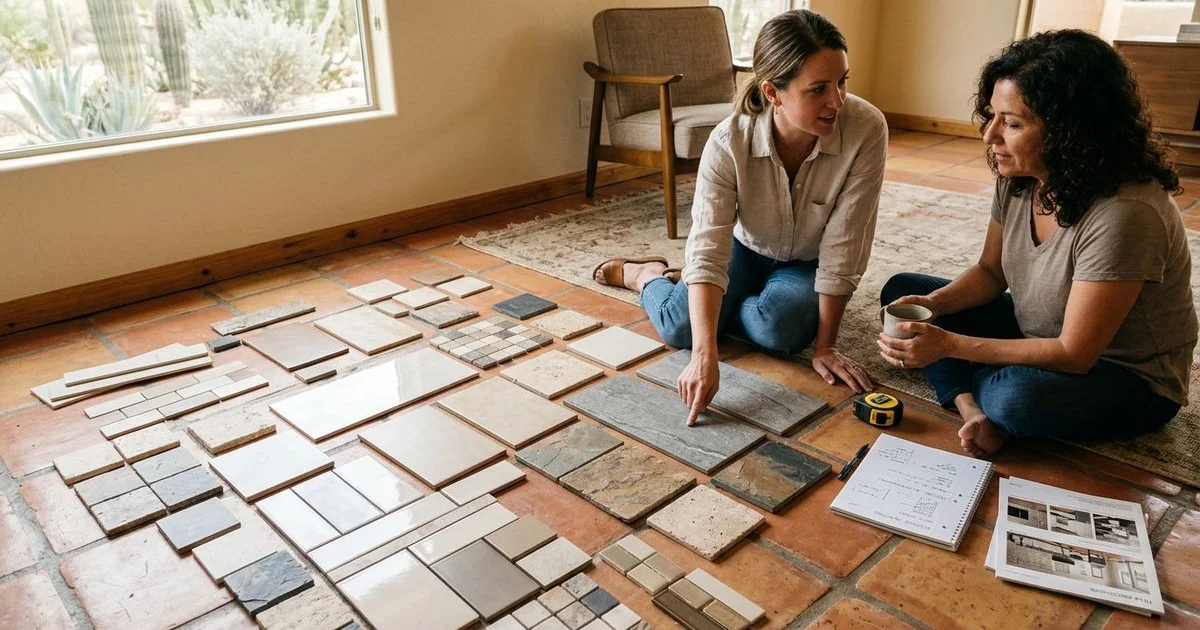
We hear the same flooring question from almost every homeowner planning a renovation.
A quick look at a showroom floor reveals dozens of similar-looking clay tiles. The basic truth is that dense porcelain resists water better, while lighter ceramic saves money and is easier to cut.
Our goal is to clear up that confusion by looking at how these materials actually perform in daily life. Understanding the specific advantages of Porcelain vs Ceramic Tile: Choosing the Right Option for Arizona Homes gives you a massive advantage.
This practical context separates standard advice from truly great design decisions.
How They’re Made (and Why It Matters)
Our tile and stone flooring installation crews know that the manufacturing process dictates exactly how a floor will hold up over time. Both options start as clay pressed into shape and fired at high temperatures. The key difference lies in the clay composition and the exact firing temperature.
The Ceramic Manufacturing Process
We regularly explain that ceramic uses a coarser clay body fired at lower temperatures near 1,800 to 2,000 degrees Fahrenheit. This moderate heat creates a lighter tile that is highly porous and very easy to cut during installation.
The Porcelain Refining Process
Porcelain utilizes a much finer material called Kaolin clay mixed with feldspar. Our suppliers fire this dense mixture at extreme temperatures between 2,200 and 2,500 degrees Fahrenheit. The intense heat fuses the particles tightly to create a product with significantly lower water absorption.
The Technical Standard
The Tile Council of North America sets the official technical threshold using the ASTM C373 testing standard. We rely on this strict standard to verify that genuine porcelain absorbs less than 0.5% of its weight in water. Ceramic products typically absorb between 3% and 7% of their weight. This absorption rate directly affects long-term durability and stain resistance in wet areas.
Durability and Hardness
Our clients demand floors that can handle busy households and heavy traffic. Porcelain easily outperforms lighter materials in raw physical strength. The industry uses the Mohs hardness scale to measure scratch resistance objectively.
We often point out that standard ceramic ranks between 4 and 6 on this ten-point scale. Premium porcelain scores a solid 7 or 8. This higher rating means the surface easily resists scratching from dog claws or dragged dining chairs.
We use the Porcelain Enamel Institute scale to determine appropriate traffic levels for every room.
- Ceramic tile: Typically PEI 3 or 4 (suitable for moderate residential traffic).
- Porcelain tile: Typically PEI 4 or 5 (suitable for heavy residential and commercial use).
Our favorite demonstration involves dropping a heavy object like a cast-iron skillet. A dropped pan will likely chip the glaze right off a softer floor. Through-body colored porcelain hides minor chips perfectly because the pigment runs through the entire thickness.
We specifically recommend dense flooring for Maricopa County homes dealing with extreme summer conditions. Neither material warps or degrades in 115-degree heat. These floors stay naturally cool underfoot to provide a genuine comfort advantage during July and August.
Water Resistance
Our standard practice is to specify distinct materials based on moisture exposure. This technical distinction separates a floor that lasts twenty years from one that fails in three. Near-zero water absorption makes specific areas perfectly safe from damage.
We insist on dense options for the following wet zones:
- Bathroom floors and custom shower enclosures require maximum water resistance.
- Outdoor patios facing heavy monsoon rain need this protection too.
Our approved list of safe dry zones includes living rooms and bedrooms. Kitchen floors handle occasional spills well but should avoid standing puddles. Decorative accent walls utilize softer clays beautifully.
The Freeze-Thaw Factor
We ensure both surfaces remain waterproof on top by checking the manufacturer glaze. Soft floors absorb moisture rapidly through unglazed bottom edges. Trapped moisture leads directly to mold growth in chronically wet bathroom areas.
Our repair teams frequently replace outdoor installations in higher-elevation cities like Flagstaff due to freeze-thaw cycles. Freezing temperatures expand trapped water to crack the surface completely. Phoenix metro yards endure sudden monsoon flooding in late summer.
We always use a fully waterproof exterior surface to prevent these rapid saturation issues entirely. Proper material selection eliminates these weather-related failures. Your new floor will survive decades of daily use.
Size and Design Options
Our design catalog features virtually unlimited colors and patterns for any layout. The current industry trend heavily favors large-format rectangles measuring 24x48 inches. Manufacturers struggle to produce these massive sizes using standard porous clays.
We rarely see standard ceramic pieces larger than 18x18 inches because they warp during firing. Modern seamless designs require rectified edges for precision installation. These laser-cut edges allow for ultra-thin 1/16th-inch grout lines.
| Feature | Standard Ceramic | Premium Porcelain |
|---|---|---|
| Maximum Common Size | 18x18 inches | 48x48 inches |
| Edge Type | Pressed (Natural) | Rectified (Laser-cut) |
| Grout Line Width | 3/16 inch minimum | 1/16 inch minimum |
| Texture Depth | Shallow glazing | Deep surface embossing |
Our most popular installations utilize these rectified planks to create wide visual planes. Brands like Daltile offer incredibly realistic wood-look finishes in dense formats. The heavier material supports deeper surface embossing to mimic natural wood grain perfectly.
We still utilize softer materials for intricate decorative patterns. Hand-painted looks and encaustic cement reproductions provide beautiful focal points. These classic mosaic styles remain highly affordable in smaller square formats.
Cost Comparison
Our estimating software tracks local Phoenix labor rates constantly to provide accurate quotes. Installed pricing varies significantly based on material density and site preparation requirements. A standard setup includes basic demolition and standard thinset application.
| Tile Type | Material Only | Installed (with labor) |
|---|---|---|
| Basic ceramic | $2.00 to $4.00/sq ft | $6.50 to $10.00/sq ft |
| Mid-range ceramic | $4.00 to $6.00/sq ft | $8.00 to $12.00/sq ft |
| Standard porcelain | $4.00 to $7.00/sq ft | $9.00 to $14.00/sq ft |
| Premium porcelain | $7.00 to $12.00/sq ft | $12.00 to $18.00/sq ft |
| Large-format porcelain | $9.00 to $15.00/sq ft | $15.00 to $25.00/sq ft |
We calculate slightly higher labor rates for dense materials because they require specialized wet saws. Installers burn through expensive diamond blades much faster on these tough surfaces. Large-format pieces demand a perfectly flat subfloor to prevent cracking.
Our crews frequently install a premium uncoupling membrane like Schluter DITRA under massive planks. This specialized underlayment adds roughly two to three dollars per square foot to the final bill. The extra investment guarantees a flawless finish that will not fracture under pressure.
Porcelain vs Ceramic Tile: Choosing the Right Option for Arizona Homes
We evaluate your specific household traffic and layout to make a final recommendation. Both options deliver incredible value when installed in the correct environment. Smart material placement protects your renovation budget immediately.
Our data confirms that minor bathroom remodels yield an impressive 79.9% return on investment. Choosing the correct waterproof barrier ensures you actually capture that added home value. Focus your spending on high-impact zones first.
High-Impact Placements
We suggest allocating the premium materials to the following demanding spaces. High-traffic entryways and main hallways require extreme scratch resistance. Commercial-look applications need through-body color to hide wear.
Budget-Friendly Zones
Our budget-saving strategy places standard clay products in lower-impact rooms. Guest bedrooms and formal dining rooms experience very light footstep volume. Decorative backsplashes sit safely away from heavy impact zones.
We love mixing both types across a single home to maximize your savings. Wet areas get the heavy-duty protection they desperately need. Dry living spaces enjoy beautiful finishes at a fraction of the cost.
See Samples in Your Home
Our design consultants know that colors change drastically under different lighting conditions. Showroom fluorescents simply do not match the natural sunlight filtering through your windows.
Reviewing physical swatches inside your actual house prevents costly design mistakes when analyzing Porcelain vs Ceramic Tile: Choosing the Right Option for Arizona Homes.
We bring the entire showroom directly to your door during a completely free consultation. An expert will help you compare different textures right where they belong. Please Schedule your free consultation or call us at 480-428-5080 to start your project.

Daniel Porter
Sales Manager, Zona Floors
Daniel Porter manages sales and client consultations at Zona Floors in Tempe, Arizona. He specializes in helping homeowners choose the right flooring materials through personalized in-home consultations across the Greater Phoenix area.
Certified Flooring Consultant · Bilingual (English/Spanish)
Looking for professional help?
Learn about our Tile Stone Flooring service →