The Best Heat-Resistant and Fade-Resistant Flooring for Arizona Homes
Arizona sun and heat can destroy the wrong flooring. Discover which materials hold up best in desert conditions — and which ones to avoid.
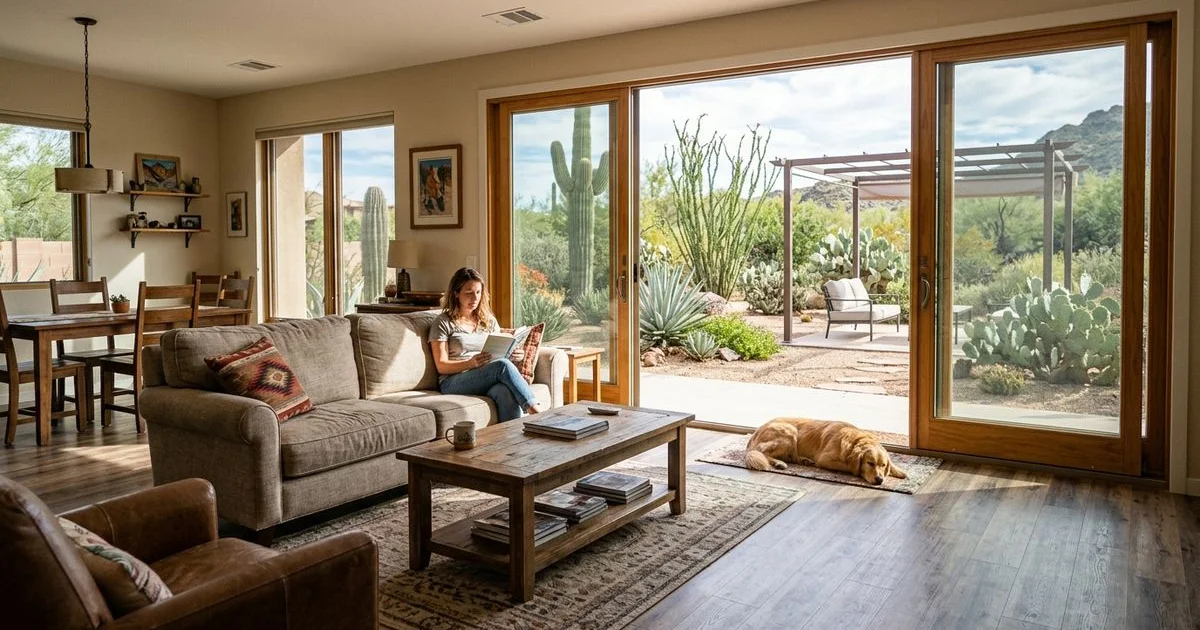
We regularly see standard flooring advice break down in the extreme desert climate of Phoenix and Scottsdale. Interior floor temperatures near south-facing and west-facing windows often exceed 130°F during typical summer afternoons. That intense environment makes finding the best heat-resistant and fade-resistant flooring for Arizona homes a unique challenge.
Our professional service team knows that choosing the wrong material means watching a major investment warp or crack prematurely.
UV exposure in this region ranks among the highest in the country. Relative humidity regularly drops below 10 percent, sucking the life out of traditional planks.
We are going to break down the exact performance data for these popular materials. The statistics reveal exactly what these materials mean for your specific rooms, leading to a few practical solutions.
Tile: The Arizona Champion
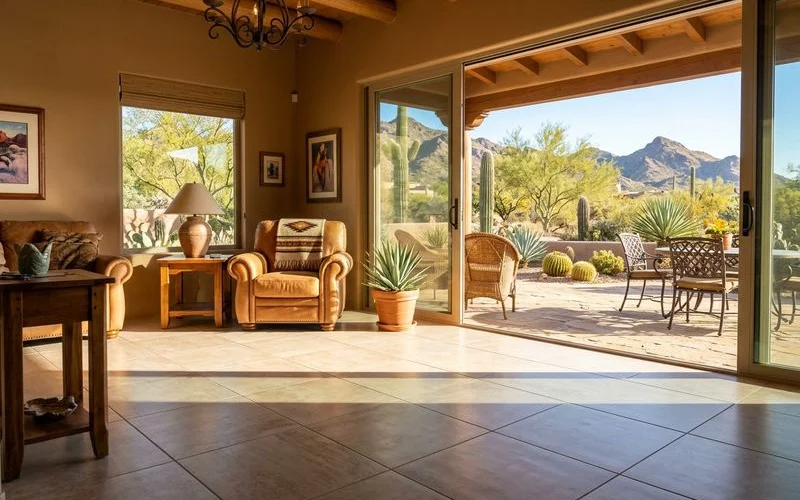
Tile acts like a natural heat sink in a desert home. Our installers have seen ceramic and porcelain from our tile and stone flooring service completely dominate this market for decades. A defining feature called thermal mass allows these clay-based materials to stay physically cooler to the touch than the ambient air.
Zero thermal expansion occurs here at any residential temperature. Our local supplier data shows that glazed surfaces reject UV rays completely. Sunlight simply bounces off the protective layer, preventing fading and discoloration.
This extreme stability makes the material completely unaffected by the dry desert air. We highly recommend this option because it is incredibly easy to clean when fine caliche dust settles inside.
The Tradeoffs of Tile
Hard surfaces feel incredibly firm underfoot and stay cold during brief winter snaps. Foundation shifts in newer developments sometimes cause these rigid materials to crack. Our crews find that tile remains the most expensive and labor-intensive material to remove later.
Best Spaces for Tile
Entryways, kitchens, and sun-exposed living areas benefit immensely from this durability. Covered patios require outdoor-rated porcelain to survive the elements.
Luxury Vinyl Plank: Performs Well with Precautions
Our recent projects show that luxury vinyl plank handles the climate surprisingly well. Modern Stone Polymer Composite (SPC) cores offer high stability and resist warping better than older Wood Plastic Composite (WPC) products. UV-resistant wear layers featuring a 20-mil thickness prevent fading in most residential conditions.
We love that this product is waterproof from top to bottom. Planks easily survive monsoon-related moisture tracked inside the house. The slightly softer surface provides decent foot comfort with minor thermal insulation value.
Handling Heat Expansion
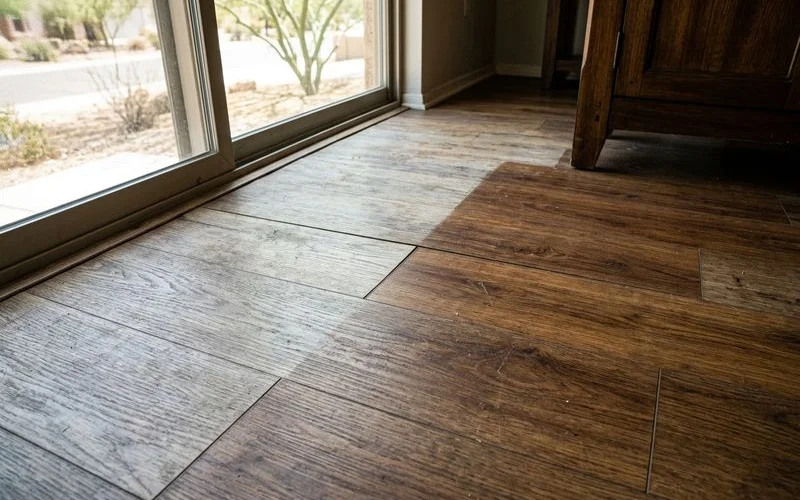
Our main concern centers around extreme direct sunlight causing standard vinyl to buckle. Surface temperatures in west-facing rooms can climb high enough to trigger thermal expansion. Heat above 85°F causes traditional planks to push against each other and tent upwards.
We prevent this by ensuring proper expansion gaps during installation. Window coverings like tinted film keep the surface temperature within safe operating ranges. Choosing an SPC core over a WPC core significantly lowers the thermal expansion coefficient.
Our design experts always advise against laying dark-colored planks directly in south-facing rooms. Dark surfaces absorb more heat and amplify the risk of failure. Appropriate spaces include bedrooms, shaded hallways, and whole-home layouts with excellent window treatments.
Engineered Hardwood: Requires Careful Selection
We find that installing real wood floors in this extreme dryness sparks intense debate. Solid hardwood is never recommended because the arid air causes it to shrink, gap, and splinter. Engineered hardwood offers a superior alternative with its dimensionally stable, cross-layered plywood core.
Our trusted suppliers note that quality engineered wood requires maintaining indoor humidity between 30 and 50 percent. Factory UV-cured finishes resist fading far better than traditional oil-based coatings. Wood species selection plays a massive role in long-term survival here.
Top Wood Species for Dry Climates
We consistently recommend dense species like Hickory and White Oak for their tight cellular structures. These resilient woods resist dramatic moisture loss and handle temperature variations beautifully. Planks featuring five or more plywood layers stay much flatter than standard three-layer constructions.
Our installers warn that wide planks measuring 7 inches or more will display seasonal gaps prominently. Fading remains a genuine threat in sunlit spaces. Dark species like walnut lighten dramatically, while light species like white oak tend to darken slightly over time.
We suggest placing engineered wood in formal living rooms or master bedrooms with managed light. Running a whole-house humidifier during the driest months is absolutely critical. UV-protective window film slows the color shifting process but cannot stop it entirely.
Laminate: Decent with Caveats
We respect laminate flooring because it delivers the look of hardwood at a fraction of the price. Current data shows it performs surprisingly well here because the dry air prevents year-round swelling. A scratch-resistant melamine surface layer provides excellent protection against pets and kids.
We always verify the Abrasion Class rating before greenlighting a project. Desert sand acts like sandpaper, so an AC3 or AC4 rating is mandatory to prevent scuffing. Planks must be at least 8 millimeters thick to maintain strong click-lock joints in dry conditions.
Moisture and Fading Concerns
Our repair calls frequently involve High-Density Fiberboard cores that suffered moisture damage. Very low humidity causes these joints to separate slightly and click when walked upon. The photographic layer beneath the clear coat shifts in color after prolonged UV exposure.
We notice this fading most prominently on darker, rich-toned laminate choices. Bedrooms, closets, and lower-budget renovations suit this material perfectly. Window treatments must be utilized to manage direct solar impact over the years.
Carpet: Short Lifespan in Arizona
We advise clients that local conditions dramatically shorten the lifespan of carpet. Fine desert dust contains abrasive caliche particles that settle deep into the fibers. Foot traffic grinds these particles like sandpaper against the yarn, accelerating wear.
Our team sees intense sunlight fade standard carpet colors directly through window glass. The region receives nearly 300 sunny days annually, accounting for massive photodegradation damage. Low humidity causes frustrating static buildup that attracts even more dust to the floor.
Upgrading to Fade-Resistant Fibers
We strongly suggest upgrading to a solution-dyed nylon carpet if you want lasting color. This manufacturing process infuses the color throughout the entire fiber instead of just coating the surface. The dye resists fading powerfully, acting more like a carrot than a red radish.
Our clients usually see a 5 to 8 year lifespan for standard carpet in this climate. Bedrooms and dedicated media rooms remain the safest locations for plush surfaces. Light, neutral colors will always hide eventual sun damage better than bold shades.
Our Recommendations by Room
Our quick reference guide matches the right materials to specific areas of your house. Moisture levels dictate the rules for kitchens and bathrooms. Sun exposure limits your options in wide-open living spaces.
| Room | Best Material | Why |
|---|---|---|
| Entryway | Porcelain tile | Heat, UV, dirt, and heavy traffic are easily handled. |
| Kitchen | LVP or porcelain tile | Waterproof properties combine with good foot comfort. |
| Living room (sun-exposed) | Porcelain tile | Zero fade or heat concerns plague this choice. |
| Living room (shaded) | LVP or engineered wood | Warmth and comfort match perfectly with manageable conditions. |
| Bedrooms | Laminate or nylon carpet | Low sun exposure means comfort matters most here. |
| Bathrooms | Porcelain tile | Excellent water resistance is absolutely non-negotiable. |
| Cover patio | Porcelain tile | Outdoor-rated options survive freezing winter nights safely. |
Protect Any Floor from Arizona Sun
We urge every homeowner to take active steps to protect their upgrades. Sunlight damages all finishes eventually without proper intervention. Heat reduction strategies save money while preserving your interior investments.
- Products like the 3M Sun Control Window Film Prestige Series reject up to 97 percent of infrared light.
- Area rugs act as sacrificial barriers in high-sun areas to protect the main surface.
- We ask clients to rotate their furniture every few months so the floor ages evenly.
- Closing the blinds during peak summer sun hours drastically cuts daily UV intensity.
- Quality window coverings prevent thermal expansion in synthetic planks on 110-degree days.
Find The Best Heat-Resistant and Fade-Resistant Flooring for Arizona Homes
Our consultants know that every home features a completely unique sun exposure profile and room layout.
A free in-home consultation evaluates your specific window orientation, room sizes, and existing subfloor conditions to find the best heat-resistant and fade-resistant flooring for Arizona homes.
You can easily Schedule your free estimate or call 480-428-5080 today to begin.

Daniel Porter
Sales Manager, Zona Floors
Daniel Porter manages sales and client consultations at Zona Floors in Tempe, Arizona. He specializes in helping homeowners choose the right flooring materials through personalized in-home consultations across the Greater Phoenix area.
Certified Flooring Consultant · Bilingual (English/Spanish)
Looking for professional help?
Learn about our Tile Stone Flooring service →